User Experience | User Research | Product Strategy | Enterprise SaaS Vision
One paycheck. four tools. no answers.
I was the Lead product designer on a zero-to-one vision for Cisco's sales compensation experience. It won funding, it's in development now, and it launches fall 2026, replacing a 15-year-old tool for 17,000+ sellers.
Sellers who depend on it
17K+
Commissioned sellers whose pay swings by thousands of dollars a month. 6,000+ checked the legacy tool daily, "like our lives depend on it."
Tools
4 → 1
Sellers moved between four tools that didn’t agree with each other to answer one question. The new experience brings goals, orders, payment, and estimates into one place.
When the new experience ships
Fall ‘26
Funded after our executive pitch, now in development, and fully replacing the legacy tool at launch.
The Ask
don't patch it. Assume nothing exists. Design the compensation experience from scratch.
The Problem
When people stop trusting the number, they build their own
A Cisco seller's pay swings by thousands of dollars a month. Answering one question, "am I being paid right?", took four tools: a compensation tool carrying 15 years of one reasonable decision after another, a sales reporting tool on a different refresh schedule, a comp plan portal, and a SPIFF tracker where sellers decoded their own eligibility by hand.
The tools didn't agree with each other. So sellers did what people do when they stop trusting a system: they built their own. Shadow spreadsheets. Side trackers. When we mapped the journey, sellers listed "word of mouth" as one of their tools. Most eventually gave up and hoped the paycheck was right.
“Salespeople have a bible called Visibility. We all look at it every day, like our lives depend on it.”
— Systems Architect, EMEA (research participant)
The Approach
Study the experience, not the tool
I joined this team to make incremental improvements to Visibility. Then, in early 2023, Cisco changed the assignment: stop improving it and reimagine sales compensation from scratch, product-agnostic. The ask, in the words of our own project SOW: "strip it back, assume we have nothing."
An ask that open can go wrong fast. Our approach to setting the stage, before designing anything. Understand how sellers think about their compensation, not what the current tool offered them. We conducted Interviews and surveys with 1,145 sellers across 65 countries, asking not "what's wrong with this tool" but "walk me through how you figure out your pay."
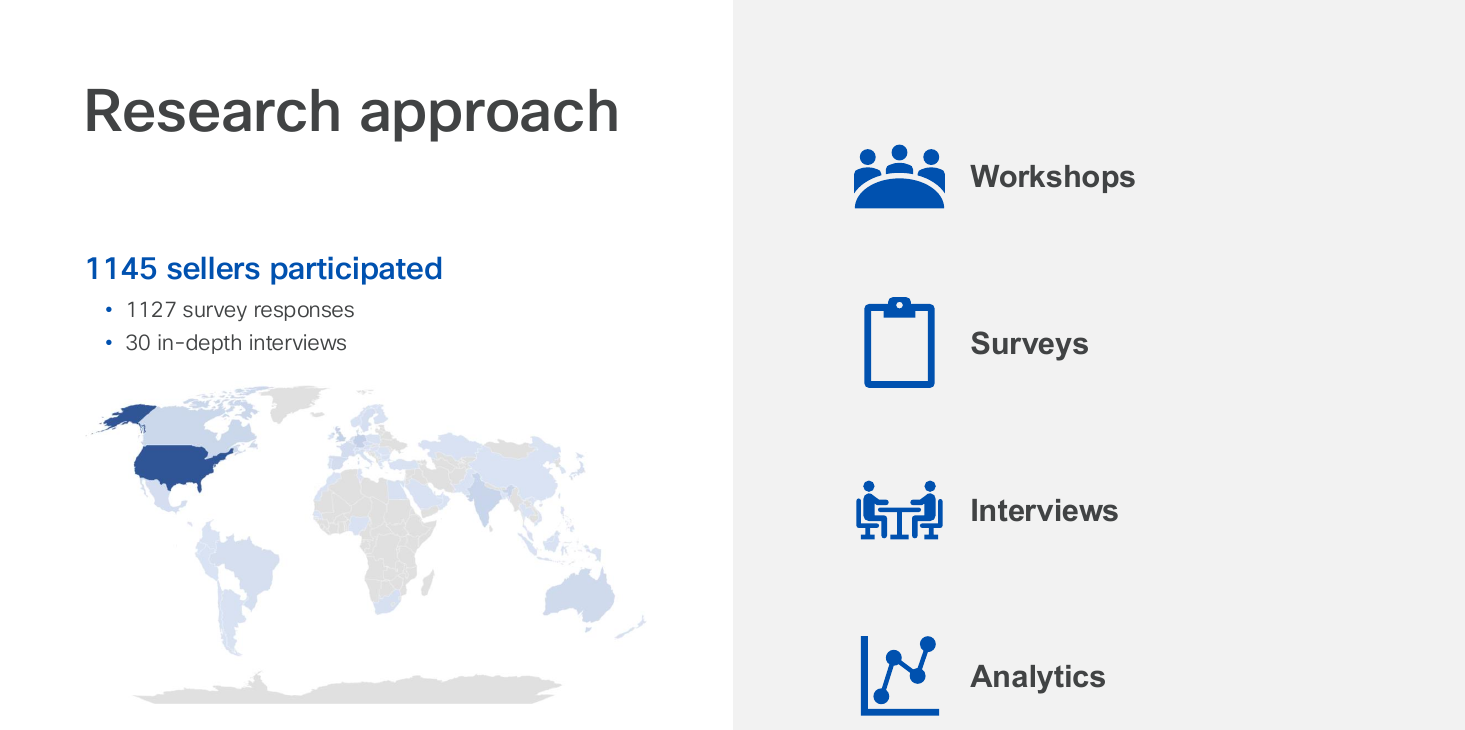
The research program: workshops, surveys, in-depth interviews, and product analytics
The Reframe
Three jobs, not four tools
Synthesis brought the sprawl down to something solid. Sellers were juggling a dozen-plus tools, but their questions kept sorting into three jobs. Every screen we'd eventually design answers one of them.
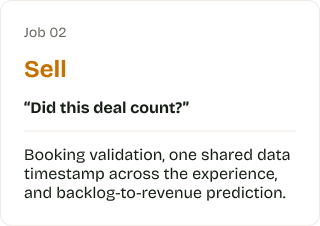
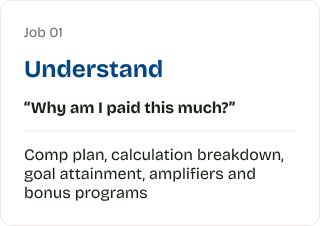
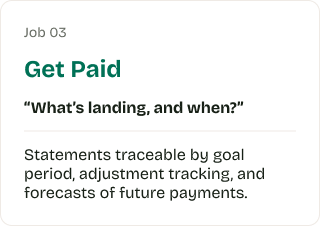
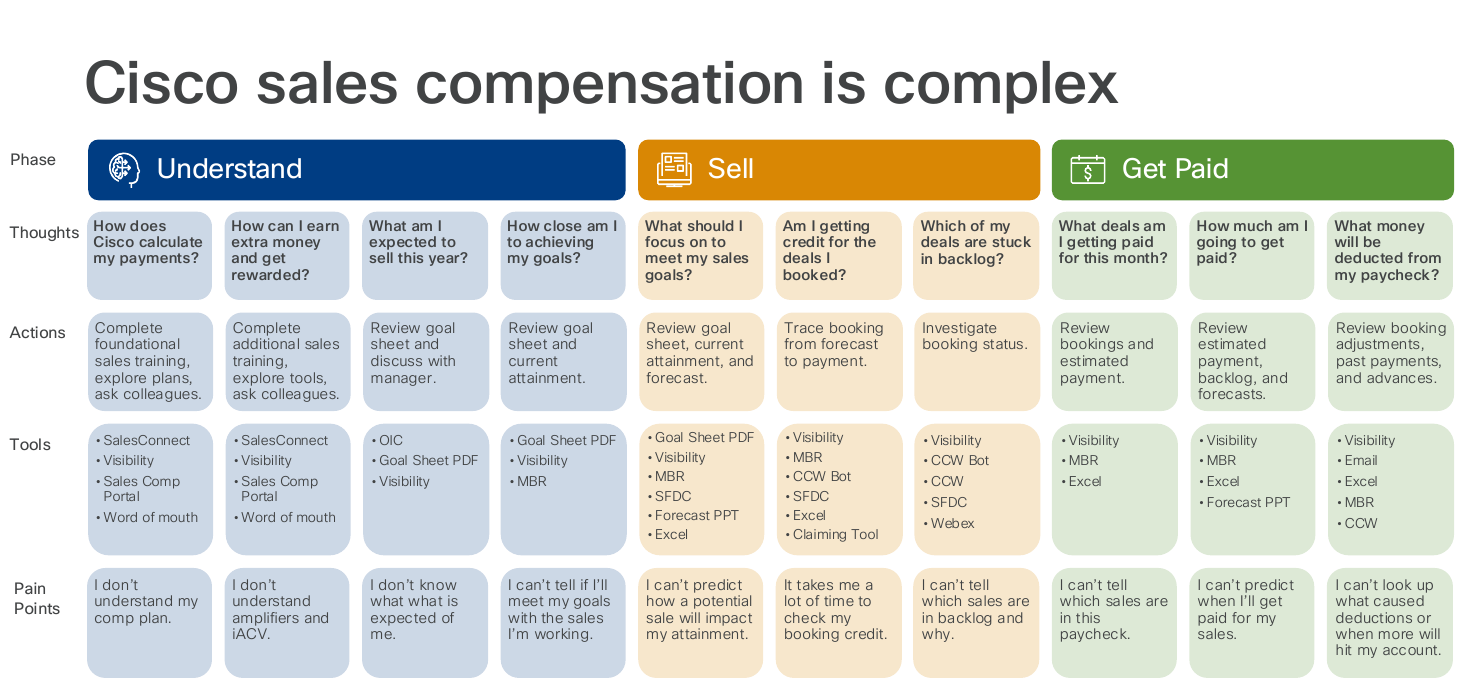
The journey map behind the framework. Look closely at the tool row: sellers listed “word of mouth” as a tool, and Excel appears in every phase.
The Prioritization
Where the business and its sellers disagreed
In a workshop, stakeholders ranked the jobs by business impact. Sellers had already ranked the same jobs in our research. When we put the two rankings side by side, the gaps jumped out. Stakeholders put “understand amplifiers” near the bottom of their list. Sellers put it near the top. The same pattern showed up for tracking adjustments and predicting future payments.
Those gaps shaped the vision. The pay estimator, the feature sellers got most excited about, came straight out of one of them. When business instincts and user evidence pointed in different directions, we followed the evidence.
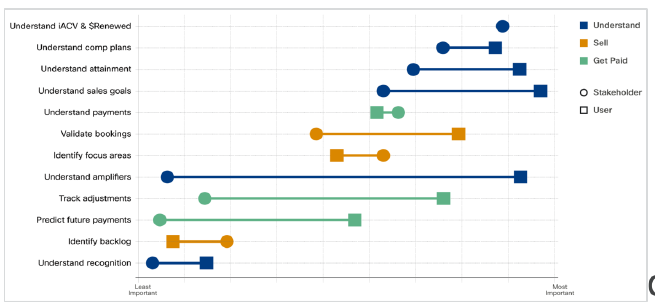
Circles: stakeholders priority. Squares: seller need. The gaps became the signature features
The Foundation
Personas, storyboards, and data in sync
Five personas came out of the research, from the seller who tracks every deal daily to the support agent investigating pay disputes. Then, before a single screen, we drew storyboards: personas moving through future scenarios. Storyboards were how we decided which data earned a place on each screen, and what the tool could finally stop showing.

Supportive Sam | Proactive Pat | Coach Casey | Pragmatic Peyton | Reactive Riley
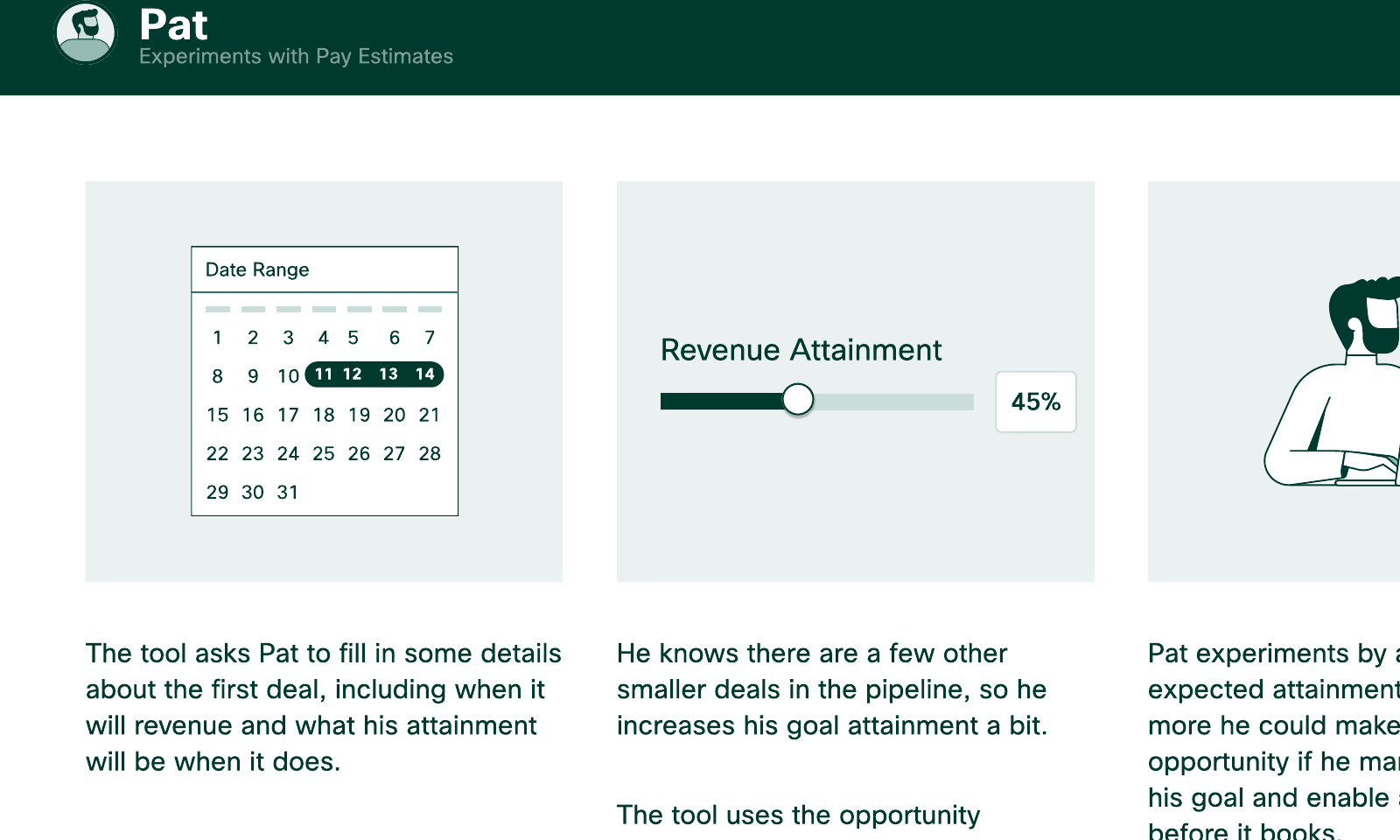
Storyboard: Pat experiments with pay estimates, before any UI existed.
The North Star
One place, every number in sync
A new platform that takes the best of every existing product and shows each seller exactly what applies to them, in one place. And underneath it, a rule that sounds boring and changes everything: all data refreshes together. Visibility refreshed different pages at different times, so a seller could see two numbers for the same deal inside one tool. The new experience runs on a single refresh cadence with a visible timestamp, so every number agrees about what moment in time it describes.
The Design
Decisions, struggles, and what testing changed
The hardest design problem in the project: let a seller visually see how much more they could earn past their sales goal, accelerator by accelerator, for each plan element. Stakeholders loved the version we landed on. My honest asterisk: we never got to test it with sellers, and it's the first thing I'd validate in the build.
The Iteration
The donut became the bar
Our first pass lumped everything a seller was paid on into one donut chart: a whole goal sheet, summarized. Clean, and it answered nothing. Our compensation SME helped us see what sellers actually needed: attainment against revenue, goal by goal, because that is what explains what each goal sheet pays. The horizontal bar reads as a timeline of attainment versus revenue, and it keeps growing past 100% when a seller beats their goal. The old design capped the best moment of a seller's year. The new one celebrates it.
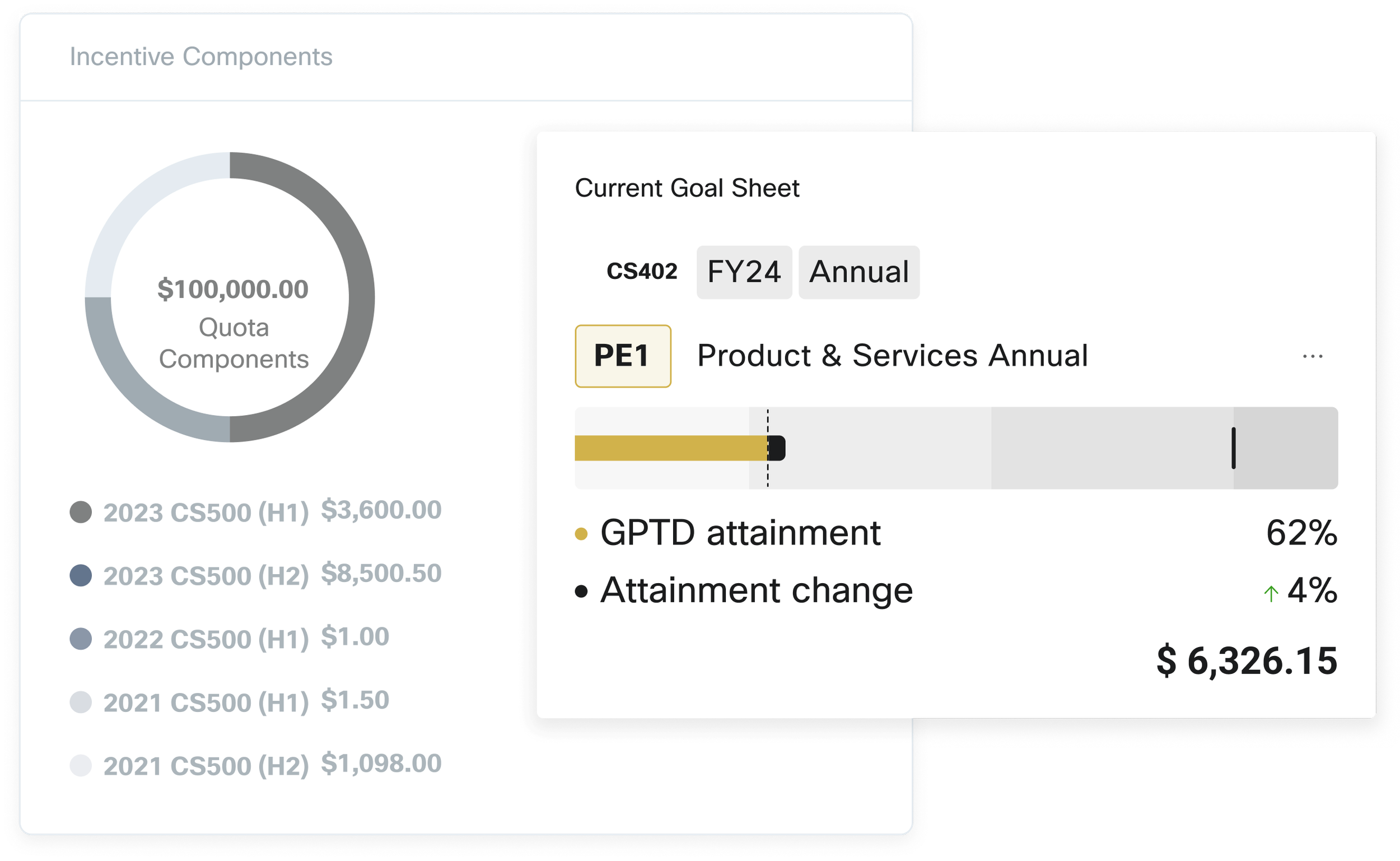
The black bar is the attainment the seller will be paid for this pay period. The tick mark is the seller’s goal.
The Trust
The clawback fix
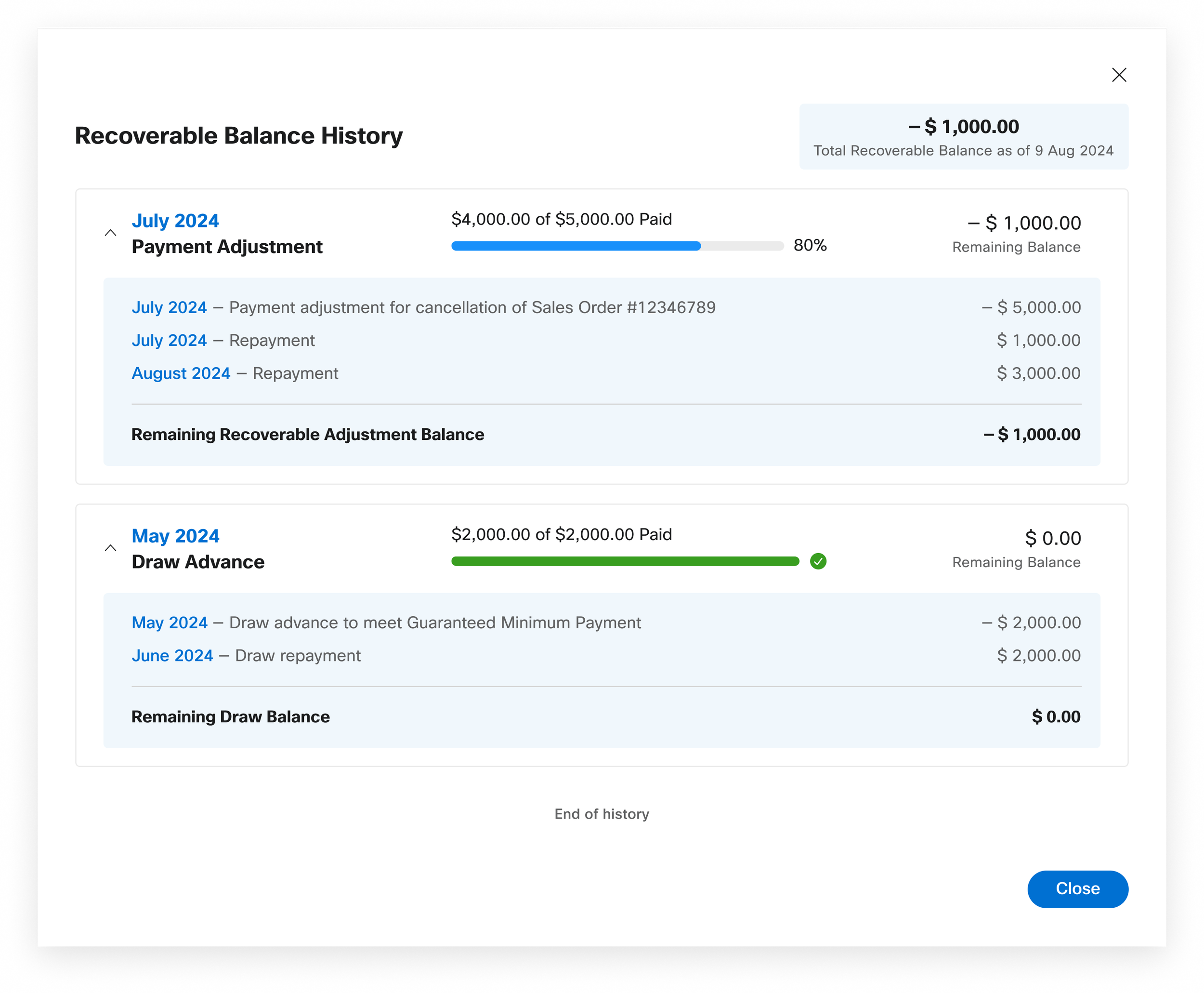
Nothing soured trust like money disappearing from a payment with no explanation. Repayment schedules for advances didn't follow a rhythm sellers could predict, so deductions felt random, and sellers told us it felt like the company was taking money from them. We designed it like a loan statement: every advance shown with its balance and the seller's progress toward paying it off.
Storyboard: Pat experiments with pay estimates, before any UI existed.
The Evidence Over Inertia
Money Taken Back, Traced to Zero
Sellers would open a paycheck and find Cisco ha taken money back, with no way to tell why or how much they owed. The legacy tool showed a closing balance and nothing else. We traced the balance back to the last time it was zero, tied every adjustment to the order that caused it, and made forgiven balances look different from owed ones.
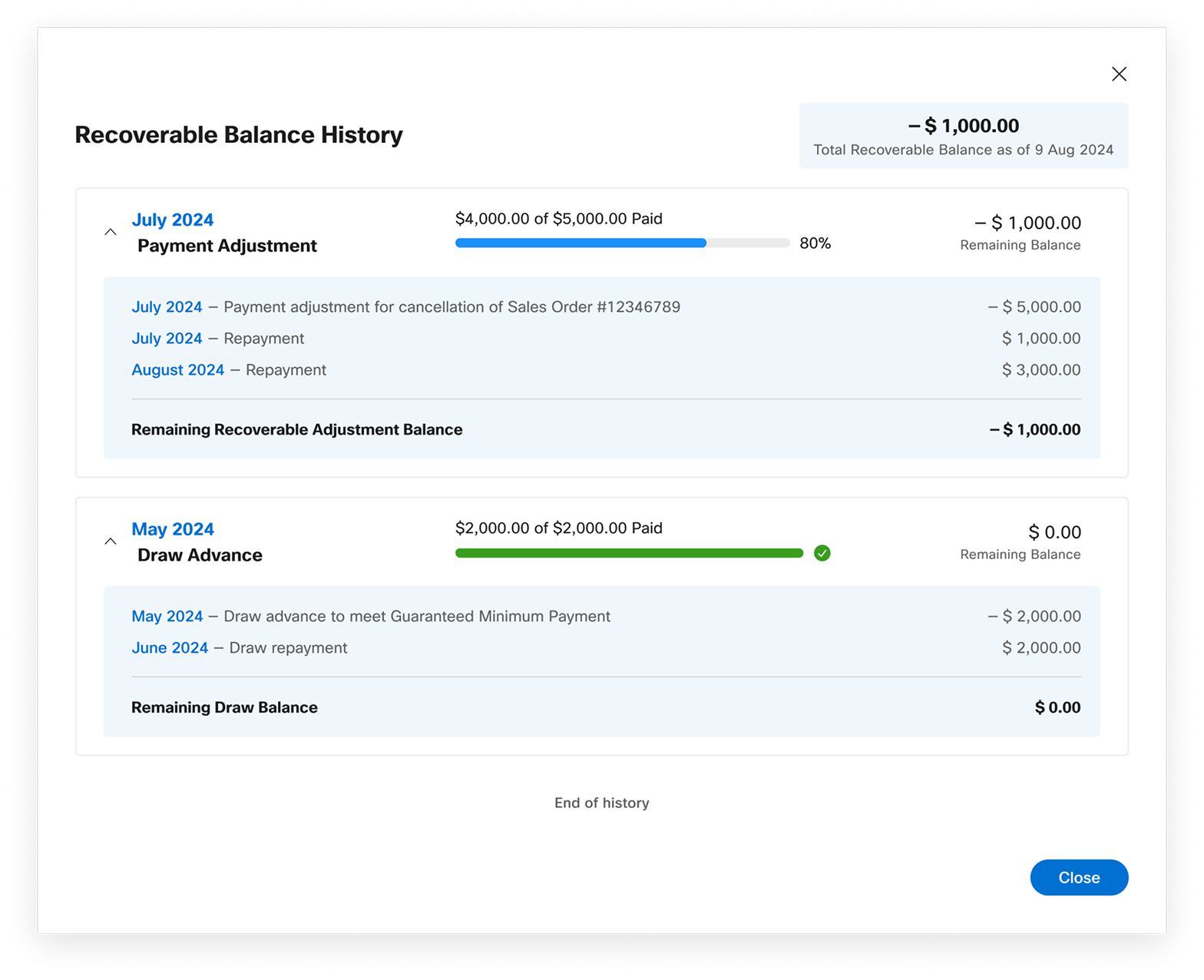
Every adjustment traces to the order that caused it. A seller isn’t told they owe money, they can see why.
The printed calendar, retired
Sellers kept a printout of the sales incentive calendar, a year of color-coded date grids, just to know when orders would process and payday would land. We put that timing into the product: every payment shows its pay date, lock date, and status. Paid, locked, open.
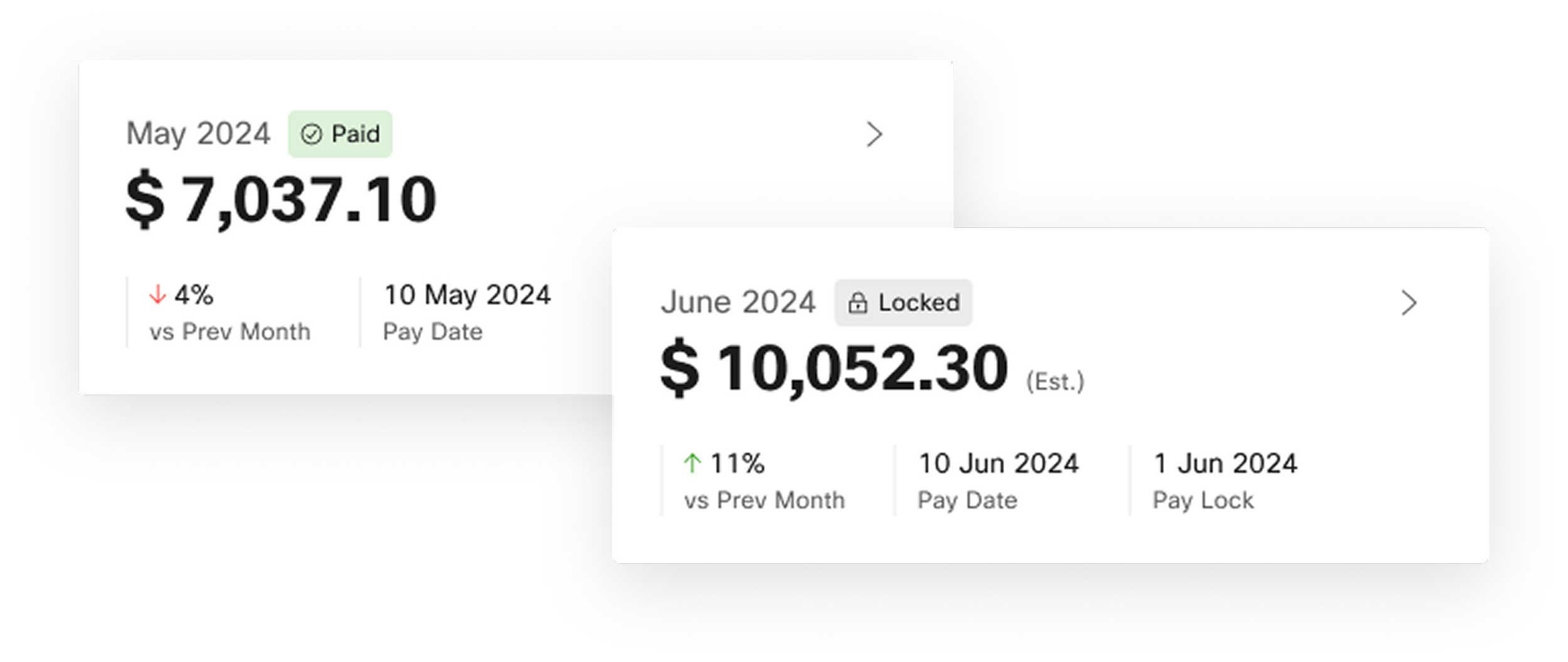
Pay date, lock date, status. The timing sellers used to decode from a printed calendar now lives on the payment itself.
SPIFFs, from static list to personal answer
Bonus programs used to live on a static site listing every SPIFF at Cisco; sellers guessed which applied to them. The new dashboard shows each seller which SPIFFs they're eligible for, with live progress where tracking exists. We deliberately designed ahead of the backend here: put the better experience in front of decision-makers and let it make the case for building the pipes.
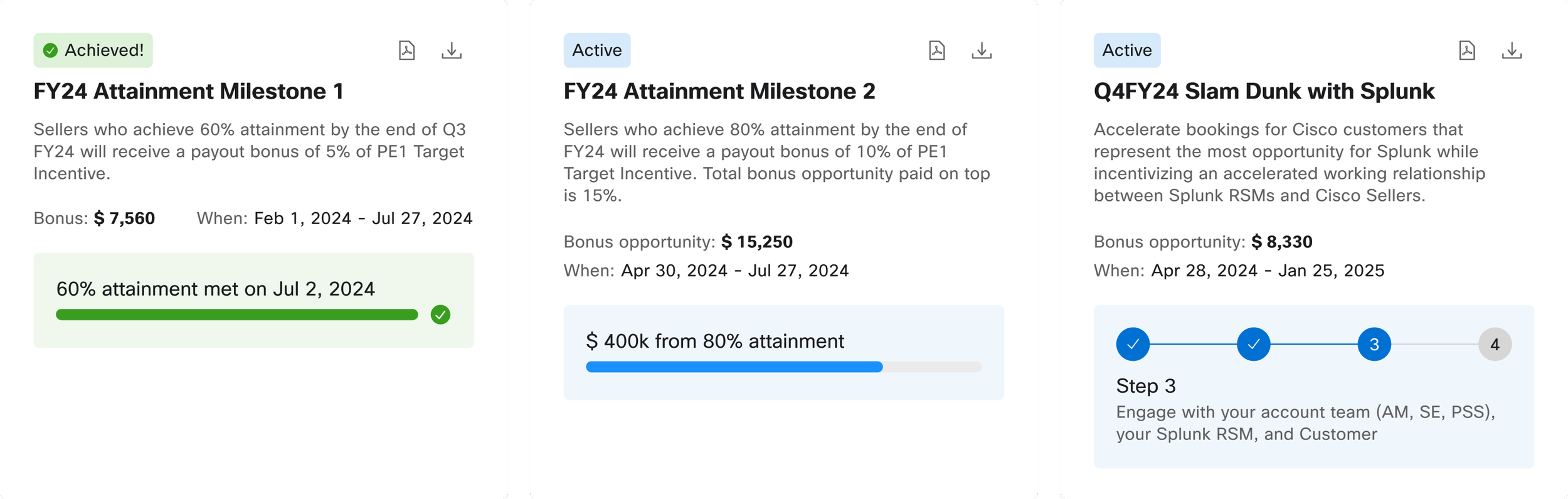
Bonus programs, finally personal displaying what it pays, when it ends, and how far along the seller is on completing the SPIFF.
Out of Scope, On The Record
AI wasn’t in scope. We recommended it anyway.
The exploration I care most about: AI discrepancy alerts. The system monitors for gaps between expected and actual pay, notifies the seller, and explains the reason. It inverts the whole relationship: no more checking and decoding every day, no more shadow spreadsheets doing the auditing. The seller gets their time back to sell, and a platform that taps you on the shoulder with a reason attached builds the trust that the company is on your side.
We also formally recommended a generative AI assistant for compensation questions in the 2023 design review; the product now in development includes chat functionality.
The Impact
What changed
Four tools and a personal spreadsheet
→
One experience, personal to each seller
A formula presented identically to everyone
→
Calculations built from seller’s own numbers
Numbers that disagreed page to page
→
Numbers that finally match, with a timestamp to prove it
Deductions that felt like theft
→
Every advance with a balance, a reason and an end date
Pay sellers learned about after it payday.
→
Predictive future payments, sellers can plan life around
“An initiative of the highest strategic priority“
— Business Operations Manager, Sales | Product Owner
This Is The Short Version
Want the full story?
I’d love to talk through the full walkthrough, artifacts, decisions, and all the things that didn't make the cut here in person.